Free Practice Test →

Minnesota Road Signs
Photographed on Real MN Roads

Every sign below was photographed on an actual Minnesota road by driver education instructors — not pulled from a clip-art library. Each entry explains what the sign means and what you are legally required to do. These are the signs that appear on the Minnesota DVS knowledge test.

61 signs · Free · No account required

Regulatory signs 29

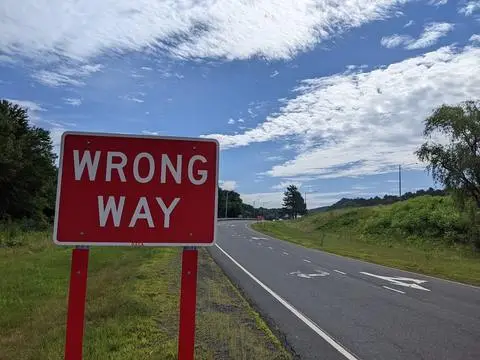
Red WRONG WAY sign facing an empty two-lane road

Wrong Way

STOP. You are a wrong-way driver — one of the deadliest driving situations on the road. Wrong Way signs (red, rectangular, white text) appear at highway ramps and one-way road exits to warn drivers who've entered from the wrong direction. Do NOT proceed. Back out carefully if safe, or pull fully to the shoulder and turn around. Then exit the way you came in. Every second you drive further into oncoming traffic multiplies the danger exponentially.

Chapter 5 — Regulatory Signs / Wrong Way
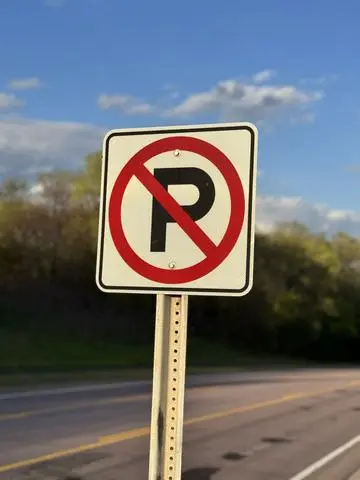
White square sign with a letter P crossed by a red circle and slash

No Parking

No Parking means you may not leave your vehicle parked (unattended) at that location. However, you may briefly stop to drop off or pick up a passenger. No Stopping is a stricter restriction — your vehicle may not stop at all, even briefly. No Standing falls between the two: you may stop but a driver must remain in the vehicle.

Chapter 3 — Parking

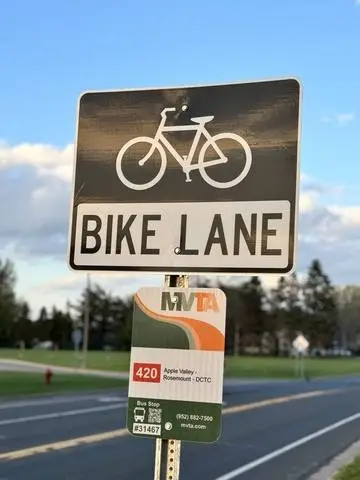
White sign with a bicycle symbol above the words BIKE LANE

Bike Lane

A designated bike lane is reserved for bicyclists and may not be used by motor vehicles for driving, passing, or parking. However, you may briefly enter a bike lane (when it is safe) to make a right turn at an intersection — but yield to bicyclists first. Always check for cyclists before crossing a bike lane.

📍 Photographed on Diamond Path, Apple Valley

Chapter 4 — Bicyclists / Chapter 5 — Regulatory Signs

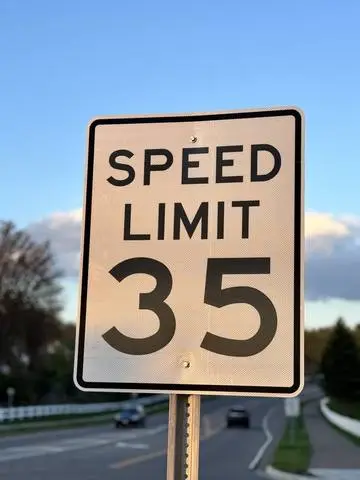
White rectangular SPEED LIMIT 35 sign beside a divided road

Speed Limit 35

The posted speed limit (35 mph) is the maximum legal speed under ideal conditions. Minnesota's basic speed rule requires you to drive at a speed that is reasonable and prudent for existing conditions. In snow or ice, you must reduce speed even below the posted limit.

📍 Photographed on Diamond Path, Apple Valley

Chapter 3 — Speed Laws

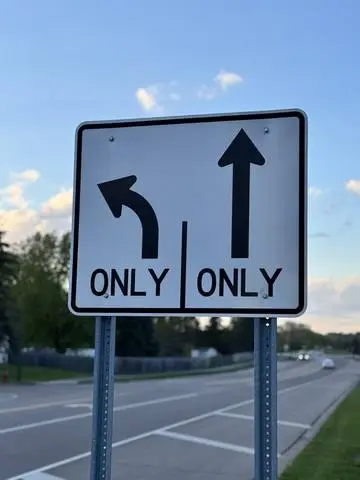
White lane-use sign showing a left-turn arrow marked ONLY beside a straight arrow marked ONLY

Lane Use Control

This is a lane use control sign. The left lane is designated for left turns ONLY — you must turn left from this lane. The right lane is straight ONLY. You cannot go straight from the left lane or turn left from the right lane. These signs override pavement arrows if there is any conflict.

📍 Photographed on Diamond Path, Apple Valley

Chapter 5 — Regulatory Signs / Lane Use

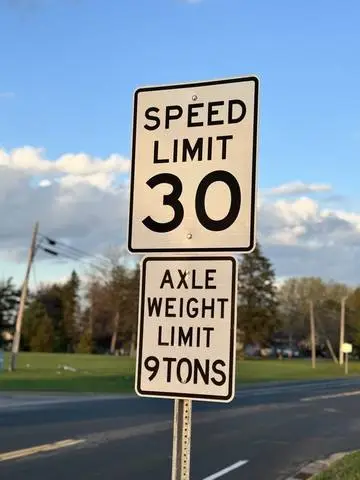
SPEED LIMIT 30 sign above a plaque reading AXLE WEIGHT LIMIT 9 TONS

Speed Limit 30 / Axle Weight Limit

Axle weight limit signs restrict how much weight any single axle of a vehicle can exert on the road surface. They primarily affect commercial trucks and heavy vehicles. Passenger cars typically weigh far less than 9 tons per axle. These limits protect road surfaces from structural damage, particularly during spring thaw when road bases are soft.

📍 Photographed on Diamond Path, Apple Valley

Chapter 5 — Regulatory Signs

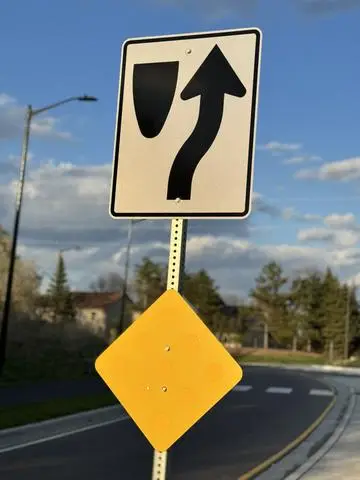
White sign showing a black arrow curving around an obstruction, above a blank yellow diamond

Keep Right

A Keep Right sign indicates you must pass a traffic island, median, or barrier on its right side. These signs are common at highway medians, traffic islands, and divided road intersections. Passing on the wrong side can put you directly into oncoming traffic.

Chapter 5 — Regulatory Signs

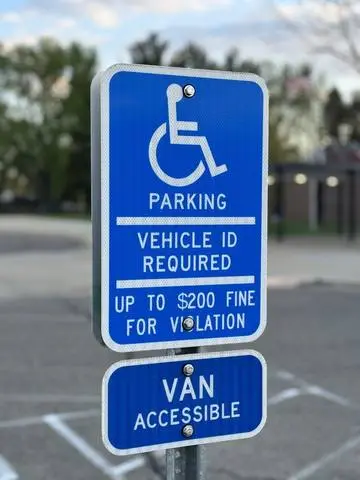
Blue accessible parking sign with wheelchair symbol, vehicle ID required and VAN ACCESSIBLE plaque

Accessible Parking (Van Accessible)

'Van Accessible' indicates this accessible parking space has an 8-foot-wide access aisle (vs. 5 feet for standard accessible spaces) to accommodate wheelchair lifts and ramps used on vans and larger adaptive vehicles. Only vehicles displaying a valid disability parking permit or license plate may use accessible spaces. Violation fine: up to $200 in Minnesota.

📍 Photographed on Diamond Path, Apple Valley

Chapter 5 — Regulatory Signs / Accessible Parking

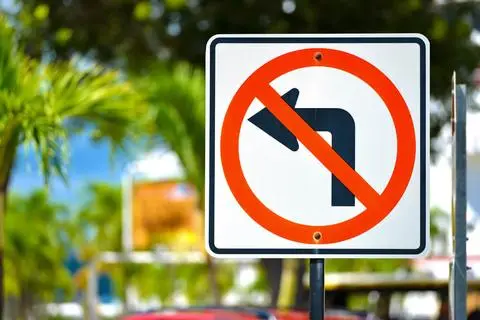
White sign showing a left-turn arrow crossed by a red circle and slash

No Left Turn

A No Left Turn sign is a legal prohibition — turning left from that location is a moving violation regardless of traffic conditions. Your GPS has led you somewhere inconvenient, but the sign wins. Go straight or turn right, find the next legal left turn or U-turn, and circle back. A U-turn in the same intersection is also typically prohibited at a no-left-turn location due to the same traffic geometry that made the left dangerous.

Chapter 5 — Regulatory Signs / Turns

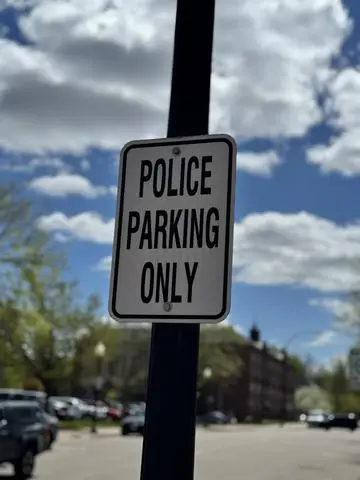
Small white sign reading POLICE PARKING ONLY on a black post

Police Parking Only

Reserved parking signs — including Police Parking Only, Fire Lane, Handicapped Parking, and similar designations — are legally enforceable. A civilian parking in a Police Parking Only space can be ticketed and towed regardless of how briefly they intended to stay. These spaces must remain open for emergency response vehicles at all times.

Chapter 3 — Parking

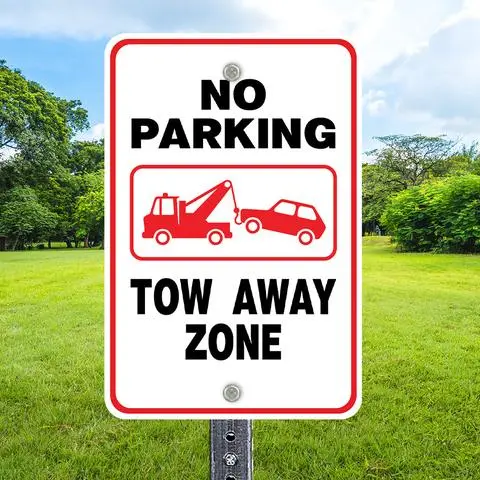
White sign reading NO PARKING with a tow truck symbol and TOW AWAY ZONE

No Parking — Tow Away Zone

No Parking Tow Away Zone means exactly what it says — vehicles parked here WILL be towed, no grace period, no warnings, no exceptions. You come back and your car is gone. Now you pay a parking fine AND a towing fee AND a daily impound storage fee. In the Twin Cities metro, that total can easily exceed $200-300 for one impulsive parking decision. The tow truck operator is not being dramatic — they're doing their job. Don't park here.

Chapter 3 — Parking

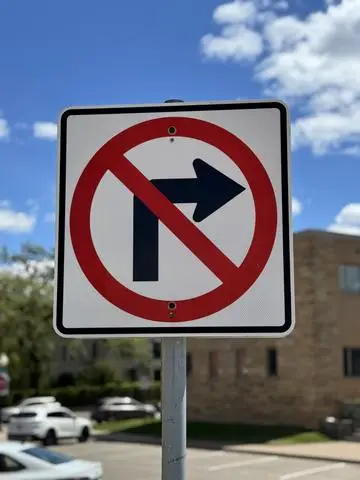
White sign showing a right-turn arrow crossed by a red circle and slash

No Right Turn

A No Right Turn sign prohibits right turns at that intersection at all times (unless specific hours are posted). These are placed where right turns create hazardous conflicts — with pedestrians, cyclists, or complex traffic patterns. To turn right, you must find the next legal intersection.

Chapter 5 — Regulatory Signs

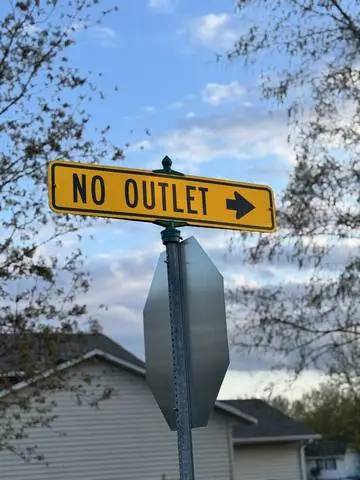
Yellow street-mounted plaque reading NO OUTLET with an arrow

No Outlet (Street Plaque)

A 'No Outlet' sign means the street or road network in the indicated direction has no through connection to another road. Unlike a Dead End (single road that ends), a No Outlet area may have several streets inside, but none connect through. If you enter, you will have to turn around and exit the same way.

📍 Photographed on Diamond Path, Apple Valley

Chapter 5 — Warning Signs

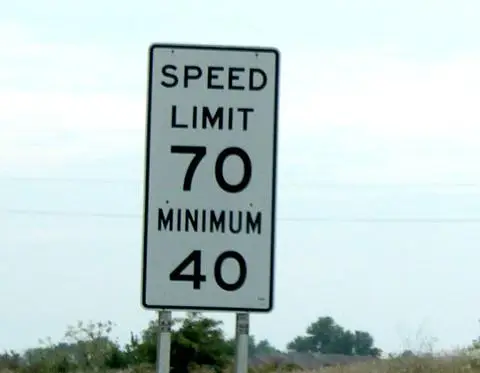
White sign reading SPEED LIMIT 70 with MINIMUM 40 below

Speed Limit 70 / Minimum 40

YES, driving below the posted minimum is illegal. Minnesota's minimum speed law requires you to travel at or above the posted minimum when conditions permit. Driving significantly below the flow of traffic creates a hazard — slow-moving vehicles force others to brake or merge unexpectedly. If road or weather conditions require slower speeds, that's an exception, but nervousness alone is not. The minimum is as real as the maximum.

Chapter 3 — Speed Laws / Minimum Speed

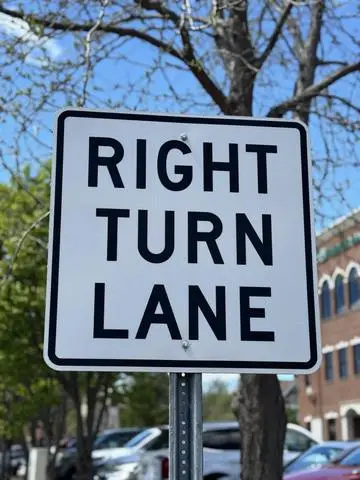
White regulatory sign reading RIGHT TURN LANE

Right Turn Lane

A Right Turn Lane sign designates that lane exclusively for right turns. If you are in this lane at the intersection, you must turn right. You cannot go straight from a dedicated turn lane. If you need to go straight, safely change lanes before reaching the intersection.

Chapter 5 — Regulatory Signs / Lane Use

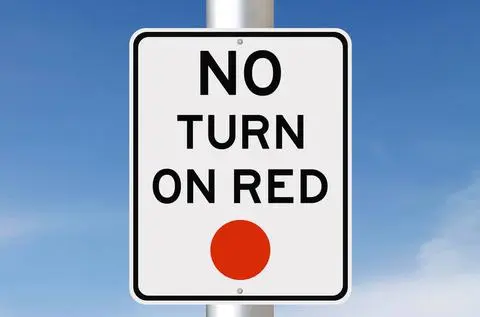
White sign reading NO TURN ON RED with a red circle

No Turn on Red

'No Turn on Red' prohibits any turn — left or right — while the light is red at that specific intersection. Under normal MN rules, drivers may turn right on red after a full stop if safe. But when this sign is posted, that exception is cancelled. You must wait for a green arrow or green ball before turning. These signs appear where pedestrian activity, sight-line restrictions, or traffic geometry make red-light turns dangerous.

Chapter 4 — Traffic Signals / Turns on Red

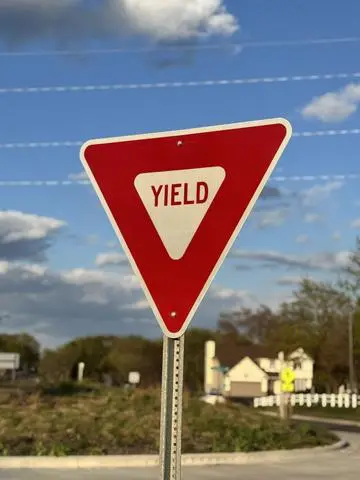
Red and white triangular YIELD sign in a residential area

Yield

A Yield sign means slow down and give the right of way. At a roundabout, circulating traffic always has priority over entering vehicles. You must stop if no safe gap exists. Once inside the roundabout, you have the right of way over entering drivers. Yield differs from Stop: Stop always requires a complete stop; Yield requires giving right of way, stopping only if necessary.

Chapter 3 — Roundabouts / Chapter 5 — Regulatory Signs

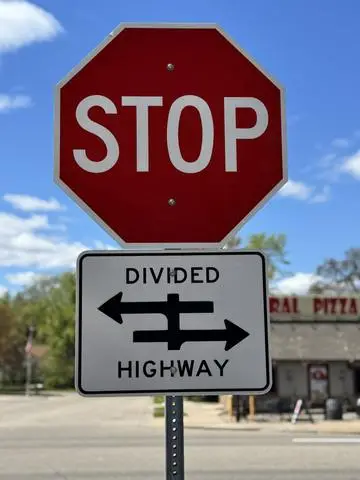
Red STOP sign above a plaque showing a DIVIDED HIGHWAY symbol

Stop — Divided Highway

A Stop sign with a 'Divided Highway' tab tells you that the road you are crossing is divided — traffic flows in separate directions separated by a median. Stop completely, then treat each side as an independent intersection. Cross the first set of lanes, stop in the median if needed, then clear the second set of lanes. Never try to cross both halves simultaneously.

Chapter 3 — Right of Way / Divided Highways
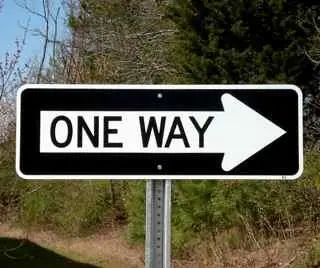
Black and white ONE WAY sign with an arrow pointing right

One Way
One Way signs (black and white, rectangular, with a bold arrow) appear at the entry and along one-way streets. All traffic flows in the direction of the arrow — period. Driving against the arrow means you're a wrong-way driver facing head-on collisions. One-way streets typically also have Do Not Enter signs posted at the far end. Never turn into a one-way street in the wrong direction, even briefly — it is one of the most dangerous and commonly cited violations.

Chapter 5 — Regulatory Signs / One-Way Streets

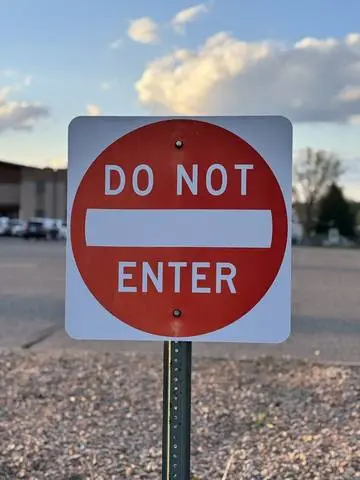
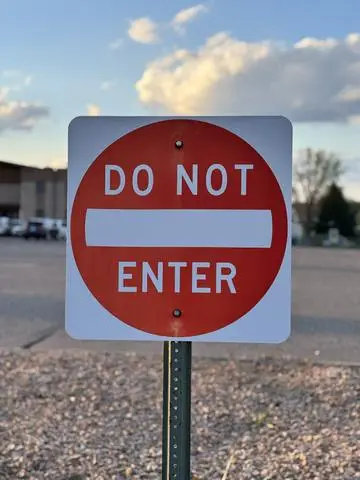
Red circular DO NOT ENTER sign with a white horizontal bar

Do Not Enter

The Do Not Enter sign (red circle with white horizontal bar and 'DO NOT ENTER' text) means you must not enter the road, driveway, or lane from this direction. It typically marks one-way exits, freeway off-ramps, or wrong-way entry points. Entering despite this sign means driving the wrong direction into oncoming traffic.

📍 Photographed on Diamond Path, Apple Valley

Chapter 5 — Regulatory Signs

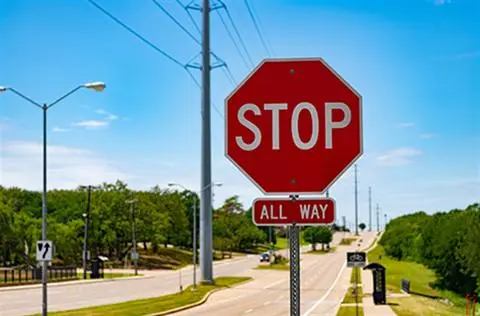
Red STOP sign with an ALL WAY plaque at a wide suburban intersection

Stop — All Way

At an all-way stop (also called a four-way stop), the rule is: first to stop, first to go. If two or more vehicles arrive at the same moment, yield to the car on your RIGHT. If you and the car ahead stop at the exact same time and you are directly across from each other, the car turning left yields to the car going straight or turning right. Take turns — don't race, don't freeze.

Chapter 3 — Right of Way / All-Way Stops

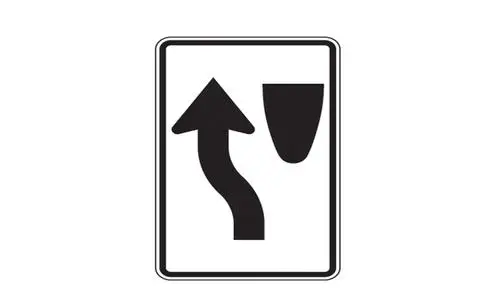
White regulatory sign showing an arrow passing to the left of a divider

Keep Left

The Keep Left sign (black curved arrow passing left of an obstacle) means you must pass a traffic island or barrier on its LEFT side. This is the mirror-image companion to the Keep Right sign — both mean traffic passes on the side the arrow directs. Wrong-side entry puts you into oncoming traffic. These appear on divided highway median openings and emergency turn-arounds.

Chapter 5 — Regulatory Signs

Red circular DO NOT ENTER sign with a white horizontal bar at a parking lot exit

Do Not Enter (Parking Lot Exit)

The Do Not Enter sign (red circle with white horizontal bar) prohibits entry from that direction. It marks one-way exits, freeway off-ramps, and divided highway medians where entering would put you into opposing traffic. Never drive past this sign — you would be traveling the wrong way.

Chapter 5 — Regulatory Signs

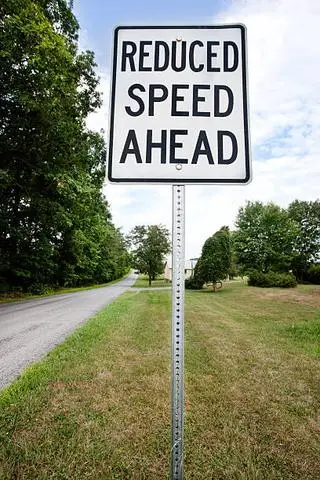
White sign reading REDUCED SPEED AHEAD on a quiet road

Reduced Speed Ahead

'Reduced Speed Ahead' warns that a lower speed limit is coming up — it's your heads-up to start braking gradually. The correct move is to begin slowing NOW, well in advance, so you're already at the new speed when you reach the speed limit sign. Waiting until you see the new limit sign and then braking hard is both dangerous and potentially illegal if you blow past the new sign still at the old speed. Think of it as your advance warning system.

Chapter 5 — Warning Signs / Speed Changes

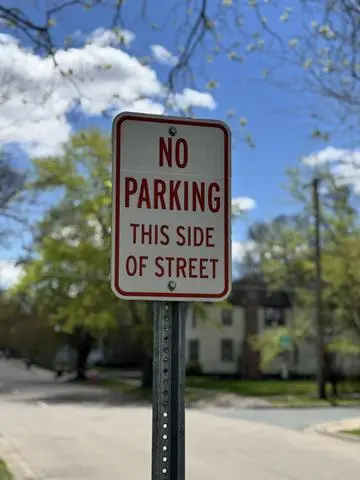
Red and white sign reading NO PARKING THIS SIDE OF STREET

No Parking This Side of Street

No Parking on This Side of Street signs restrict parking on one side of the road, typically to facilitate street cleaning, snow removal, or traffic flow during peak hours. The restriction only applies during the times and days shown. Always read the full sign before leaving your vehicle.

Chapter 3 — Parking

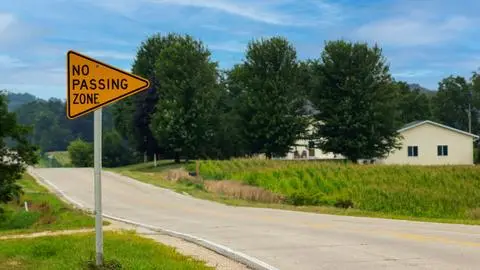
Yellow pennant-shaped NO PASSING ZONE sign on the left side of a two-lane highway

No Passing Zone

The No Passing Zone sign is the only pennant-shaped sign in use — its unique shape means you cannot miss it. It marks stretches of road where passing is prohibited: hills, curves, intersections, or places with restricted sight distance. Even if the vehicle ahead is crawling, you cannot legally pass when this sign is posted. Patient drivers live longer. The sign is also paired with solid yellow center lines on your side of the road.

Chapter 3 — Passing / Chapter 5 — Regulatory Signs

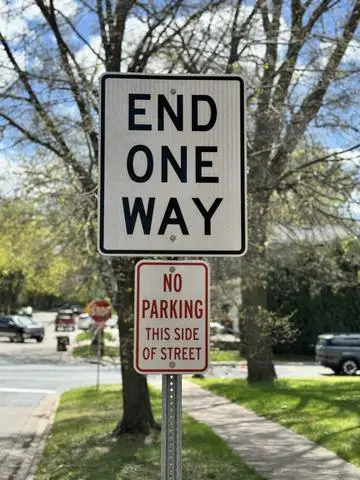
White sign reading END ONE WAY above a NO PARKING THIS SIDE OF STREET plaque

End One Way

An 'End One Way' sign marks where a one-way street ends and two-way traffic resumes. After this sign, oncoming traffic is possible from ahead. Adjust your lane position, speed, and awareness accordingly — you are now sharing the road with traffic from both directions.

Chapter 5 — Regulatory Signs

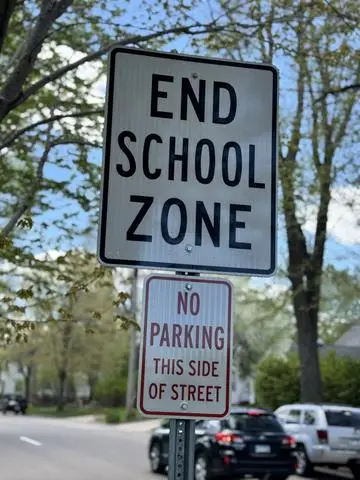
White sign reading END SCHOOL ZONE above a no-parking plaque

End School Zone

An 'End School Zone' sign marks where the school zone and its associated reduced speed limit ends. Normal posted speed limits resume beyond this point. You should not accelerate until you have passed this sign and confirmed you are clear of the school zone.

Chapter 5 — School Zone Signs

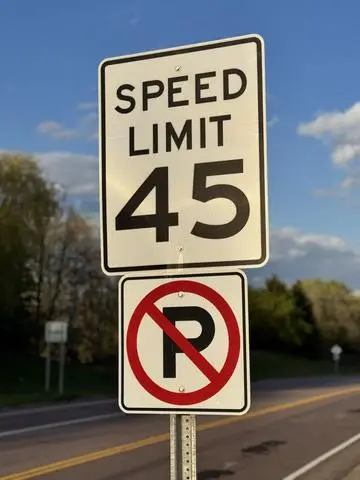
SPEED LIMIT 45 sign above a no-parking symbol

Speed Limit 45

The white regulatory speed limit sign sets the MAXIMUM legal speed. However, Minnesota's basic speed law requires you to drive at a speed that is safe for current conditions — even below the posted limit when rain, ice, fog, or heavy traffic make it unsafe to drive faster. In wet conditions, reduce speed and increase following distance regardless of the posted limit.

Chapter 3 — Speed Laws / Chapter 2 — Driving in Adverse Conditions

Warning signs 21

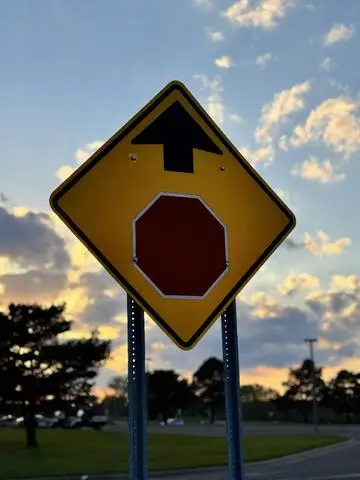
Yellow diamond warning sign showing an arrow pointing to a red octagon, at dusk

Stop Ahead

The Stop Ahead warning sign (yellow diamond with stop sign symbol and arrow) is placed in advance of a stop sign when the stop sign may not be clearly visible due to distance, a curve, or an obstruction. It is a WARNING — not the stop itself. Reduce speed and prepare to come to a complete stop at the actual Stop sign ahead.

Chapter 5 — Warning Signs

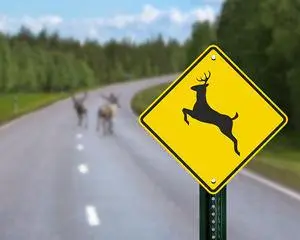
Yellow diamond sign with a leaping deer symbol, with deer on the road behind it

Deer Crossing

Deer Crossing warning signs mark areas with frequent deer activity — especially dangerous at dawn and dusk when deer are most active. Slow down and scan the road edges, ditches, and tree lines. Critically: deer rarely travel alone. If you see one, expect more. If a deer freezes in your headlights, brake firmly and hold your lane — swerving to avoid deer causes more fatal crashes than hitting them. In Minnesota, deer-vehicle collisions peak October through December.

Chapter 6 — Hazards and Animals / Chapter 5 — Warning Signs

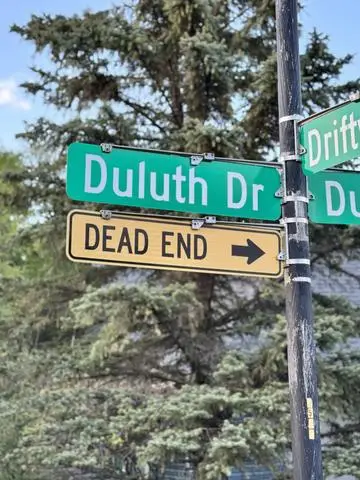
Green street sign reading Duluth Dr with a DEAD END plaque and arrow below

Dead End

A Dead End sign means the road you are entering has no through connection — it ends with no exit. You will have to turn around and leave the same way you entered. Plan ahead before turning down a dead end, especially with a larger vehicle that is difficult to reverse.

Chapter 5 — Warning Signs

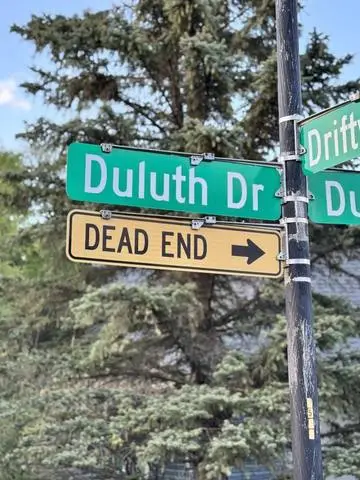
Green street sign reading Duluth Dr with a DEAD END plaque and arrow below

Dead End

A 'Dead End' sign warns that the road in the indicated direction has no outlet — it terminates without connecting to another road. You must turn around and return the way you came. This is different from 'No Outlet,' which means the area has no through road but may have a small road network inside.

📍 Photographed on Diamond Path, Apple Valley

Chapter 5 — Warning Signs

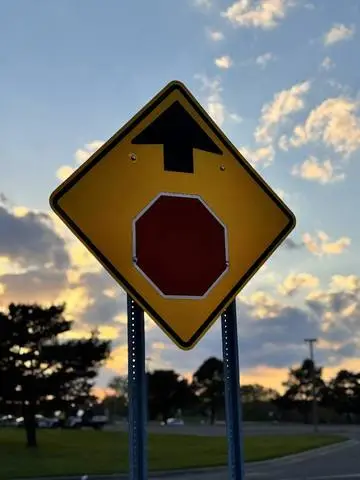
Yellow diamond sign with an arrow pointing to a red octagon, silhouetted at dusk

Stop Ahead

The 'Stop Ahead' warning sign (yellow diamond with a red octagon symbol and an arrow) warns drivers that a STOP sign is coming up ahead on their road. This gives advance warning, especially where the stop sign may not be immediately visible due to curves, hills, or obstructions. Begin slowing down when you see this sign.

📍 Photographed on Diamond Path, Apple Valley

Chapter 5 — Warning Signs

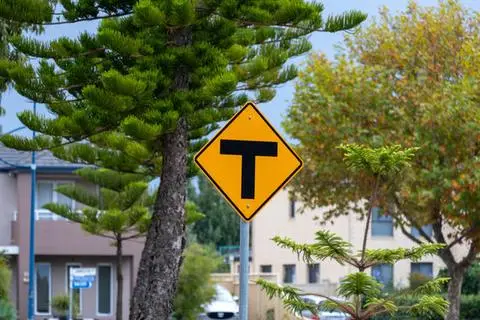
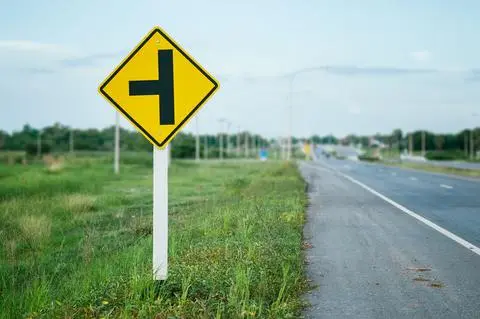
Yellow diamond sign showing a black T shape for a T intersection ahead

T Intersection

The T-Intersection sign means you are approaching the end of the road you are on — it terminates at a cross-road and you have no choice but to turn left or right. Unlike a 4-way where you can go straight, a T means straight is not an option. The sign gives you advance warning to decide your turn, signal early, reduce speed, and yield to cross traffic. Drivers who miss this sign sometimes drive straight — and into a ditch, field, or building. The T does not forgive momentum.

Chapter 5 — Warning Signs / Intersection Types

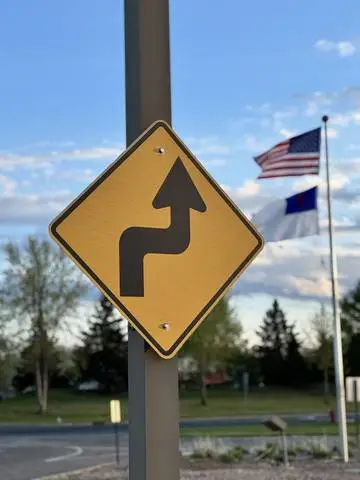
Yellow diamond sign showing an arrow bending right then left

Reverse Curve

The S-shaped arrow with an upward arrowhead is a Reverse Curve sign. It warns that the road curves in one direction and then curves back in the opposite direction — in this case, right then left. Drivers should reduce speed and stay in their lane through both curves. This is different from a simple curve sign.

📍 Photographed on Diamond Path, Apple Valley

Chapter 5 — Warning Signs

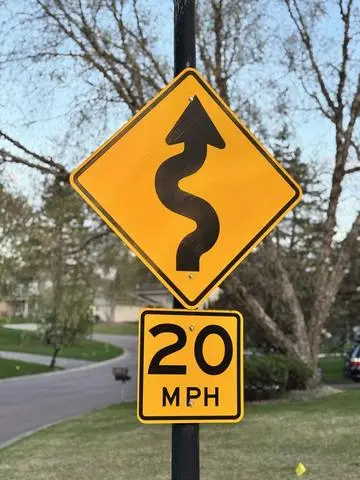
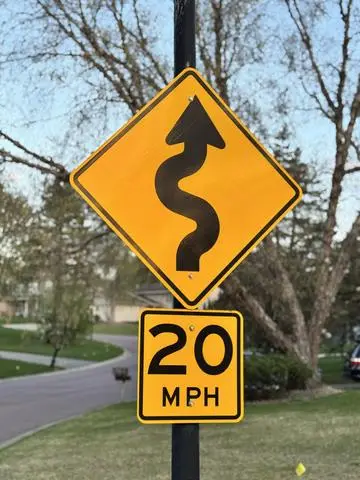
Yellow diamond sign with a winding S-shaped arrow above a 20 MPH advisory plaque

Winding Road

The winding road sign warns of multiple curves in alternating directions. The 20 MPH yellow tab is an advisory speed — reduce to this before the curves, not during them. Braking while turning can cause a skid. Slow in advance, then maintain a steady speed through all curves without crossing the center line.

Chapter 5 — Warning Signs / Advisory Speed

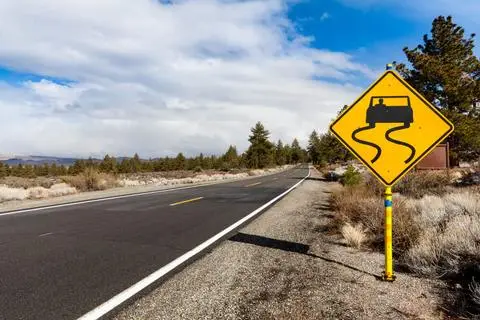
Yellow diamond sign showing a car with wavy skid lines beneath it, beside a rural road

Slippery When Wet

Slippery When Wet signs mark specific road surfaces with reduced traction in wet conditions — often due to smooth pavement, painted surfaces, metal grates, bridge decks, or roads with clay or oil accumulation. The sign is warning you about a hazard that isn't present RIGHT NOW but will be when it rains. File that location in your memory: reduce speed and increase following distance here whenever the road is wet, even slightly damp.

Chapter 5 — Warning Signs / Chapter 2 — Driving in Adverse Conditions

Yellow diamond sign with an arrow curving to the right, beside a rural highway

Curve Ahead

Curve Ahead warning signs mean you need to slow down BEFORE you reach the curve — not during it. Braking while your wheels are already turning causes loss of traction and potential skidding. The safe technique: slow to a safe speed on the straight approach, then maintain a steady speed or light acceleration through the curve. Accelerating out of a curve (once straightening) is fine — braking in one is not.

Chapter 6 — Steering and Curves

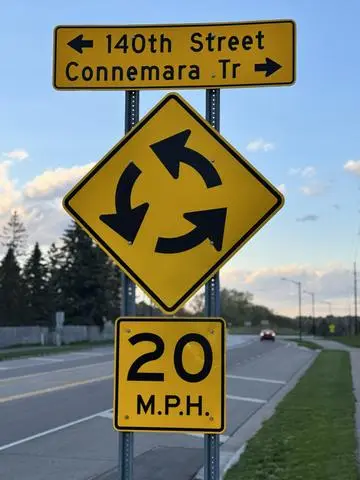
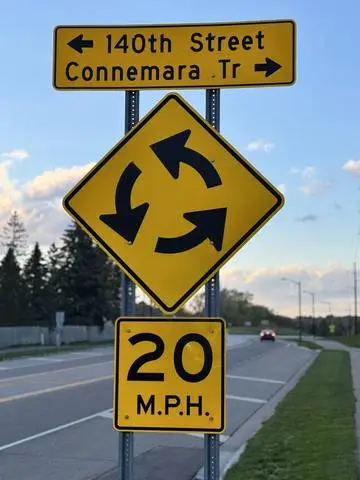
Yellow diamond roundabout sign with circular arrows and a 20 MPH plaque, under a 140th Street and Connemara Trail street sign

Roundabout Ahead

The yellow diamond with circular arrows is the MUTCD roundabout warning sign. The '20 M.P.H.' tab below is the advisory entry speed. The directional tab identifies 140th Street to the left and Connemara Trail to the right. In a roundabout, you yield to circulating traffic and travel counterclockwise.

📍 Photographed on Diamond Path, Apple Valley

Chapter 3 — Roundabouts / Chapter 5 — Warning Signs

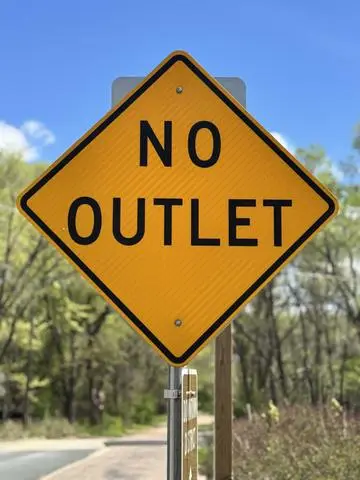
Yellow diamond sign reading NO OUTLET

No Outlet

A No Outlet sign warns that the street or road network ahead has no connection to another road. Unlike a Dead End (single road that ends), a No Outlet area may have multiple streets inside but none connect through. If you enter, plan to turn around and exit the same way.

Chapter 5 — Warning Signs

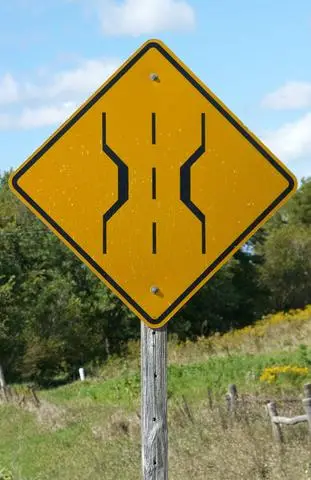
Yellow diamond sign showing two lines pinching inward, indicating the road narrows

Road Narrows

A Narrow Bridge sign warns that the bridge ahead is not wide enough for two vehicles to pass comfortably — or at all. If an oncoming vehicle is already on the bridge, stop and wait before entering. If you are already on the bridge, slow to a crawl and keep as far right as possible. Never try to race another vehicle onto a narrow bridge. Bridge guardrails are not forgiving. In Minnesota, many rural county road bridges are old and genuinely one-lane — treat them that way.

Chapter 5 — Warning Signs / Bridge and Road Restrictions

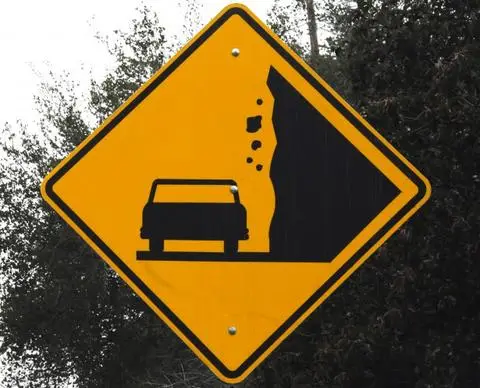
Yellow diamond sign showing boulders falling from a cliff toward a car

Falling Rocks

Falling Rocks / Rockslide signs appear where natural cliff faces, highway cuts through rock, or steep bluffs have a history of rocks breaking loose onto the road. In Minnesota, you will encounter these along the North Shore (US 61), the St. Croix River bluffs, and some highway cuts in northeastern MN. Key rules: do not stop or park beneath overhanging rock faces (you cannot outrun a sudden rockslide). Watch for rocks in your lane — they appear suddenly and a tire strike at highway speed is dangerous. After heavy rain or freeze-thaw cycles, the risk is highest.

Chapter 5 — Warning Signs / Roadway Hazards

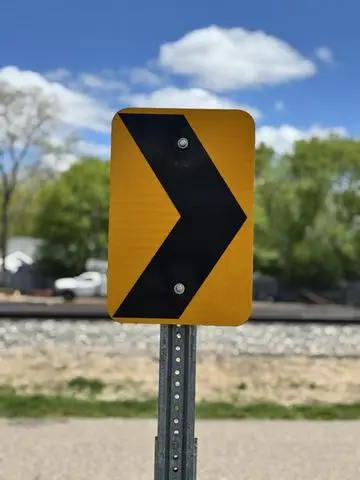
Yellow rectangular sign with a large black chevron arrow marking a curve

Chevron Curve Marker

Yellow chevron delineator markers are placed on curves to mark the road edge and guide drivers through the turn. They are highly reflective for nighttime visibility. A series of chevrons indicates the curve ahead — follow their direction and reduce speed. They are especially common at sharp curves where running off the road is a risk.

Chapter 5 — Warning Signs / Delineators

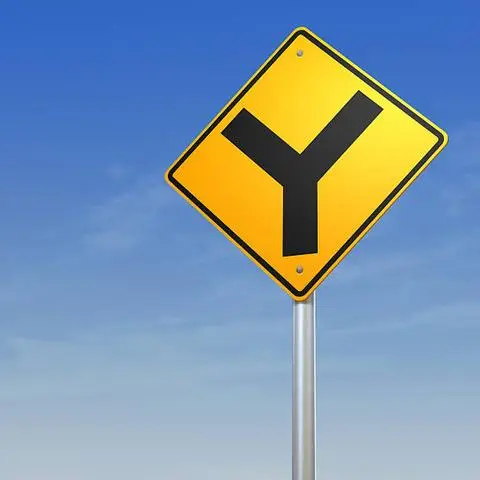
Yellow diamond sign showing a black Y shape for a Y intersection ahead

Y Intersection

The Y-Intersection sign warns that the road ahead forks into two branches — like the letter Y. Unlike a T where you clearly end, a Y can be disorienting because both paths look like reasonable continuations. Know which branch you need before you reach the fork. Slow down, signal your intended direction, and yield to any through-traffic on the branch you are entering. In rural areas, Y-intersections can appear suddenly around curves — the warning sign is your only advance notice.

Chapter 5 — Warning Signs / Intersection Types

Yellow diamond sign showing a side road joining from the left

Side Road

The Side Road warning sign shows a road entering the main highway from the side — in this case from the left. You have the right of way as the driver on the main road, but the sign warns you to watch for vehicles from that side road who may not yield. Side road entrances can have limited sight lines. Scan for approaching vehicles, brake lights, and dust or movement in your peripheral vision as you approach. Never assume a side road driver has seen you.

Chapter 5 — Warning Signs / Intersection Warnings

Yellow diamond roundabout sign with circular arrows and a 20 MPH plaque, under a 140th Street and Connemara Trail street sign

Roundabout Ahead

The yellow diamond with circular arrows is the roundabout warning sign. The '20 M.P.H.' tab is an advisory speed — the recommended safe entry speed, not a legal limit. In a roundabout, yield to vehicles already circulating inside, travel counterclockwise, and signal before your exit. Never stop inside the roundabout unless about to hit someone.

Chapter 3 — Roundabouts / Chapter 5 — Warning Signs

Yellow diamond sign with a winding arrow above a 20 MPH plaque in a residential street

Winding Road

A yellow speed tab below a warning sign indicates an advisory speed — the recommended safe speed for that specific condition (in this case, the winding curves ahead). It is NOT a legal speed limit. You may drive faster, but the sign warns that 20 mph is the safe speed for these curves.

📍 Photographed on Diamond Path, Apple Valley

Chapter 5 — Warning Signs / Advisory Speed

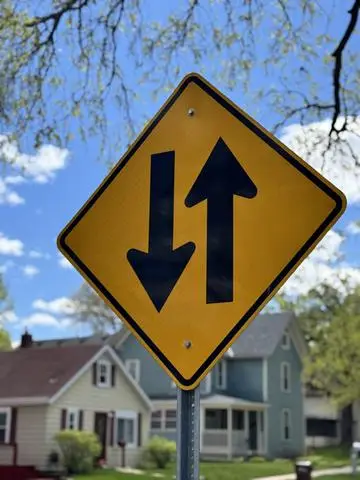
Yellow diamond sign showing two opposing vertical arrows for two-way traffic

Two Way Traffic

The Two Way Traffic warning sign (yellow diamond with opposing arrows) alerts drivers that the road ahead carries traffic in both directions. This is commonly posted where a one-way road transitions to two-way traffic. After passing this sign, watch for oncoming vehicles, stay in your lane, and position yourself to the right of the center line.

Chapter 5 — Warning Signs / One-Way Streets

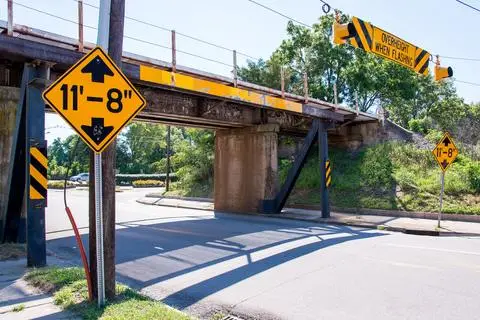
Yellow diamond low clearance sign reading 11 feet 8 inches in front of a railway bridge

Low Clearance

Low Clearance signs post the MAXIMUM height that can safely pass beneath a bridge, overpass, or overhead obstruction — in this case 11 feet 8 inches. Your 12-foot truck is 4 inches too tall. Do NOT proceed. The sign is not an approximation. Trucks get stuck under low bridges every day — it's so common there are YouTube channels dedicated to it. Turn around, find a route with adequate clearance. A stuck or sheared truck is a traffic catastrophe and an expensive repair bill.

Chapter 5 — Warning Signs / Vehicle Restrictions

School, playground and pedestrian signs 3

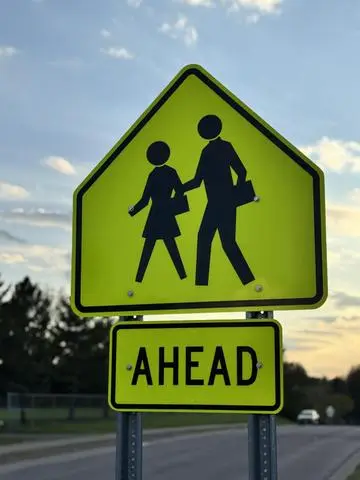
Fluorescent yellow-green diamond sign showing two students walking, with an AHEAD plaque

School Crossing Ahead

The School Crossing Ahead sign (yellow-green pentagon + 'AHEAD' tab) warns that a school crossing is coming up. Slow down immediately, scan for children, and be prepared to stop. Minnesota law requires yielding to pedestrians at school crossings. The fluorescent yellow-green color maximizes visibility in all light conditions — especially at dawn and dusk when children are most active.

Chapter 4 — Pedestrians / Chapter 5 — School Zone Signs

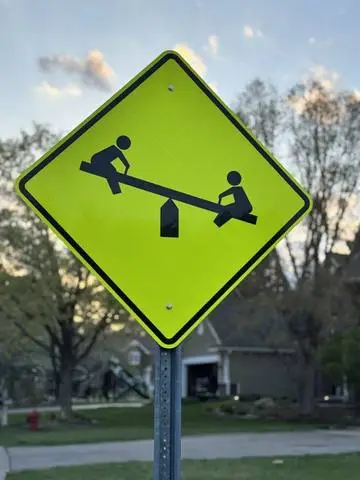
Fluorescent yellow-green diamond sign showing two children on a seesaw

Playground

This bright yellow-green diamond warning sign with a seesaw symbol means a playground is nearby and children may be present near the road. Slow down and be prepared to stop. Yellow-green is used specifically to maximize visibility in areas where children are present.

📍 Photographed on Diamond Path, Apple Valley

Chapter 5 — Warning Signs

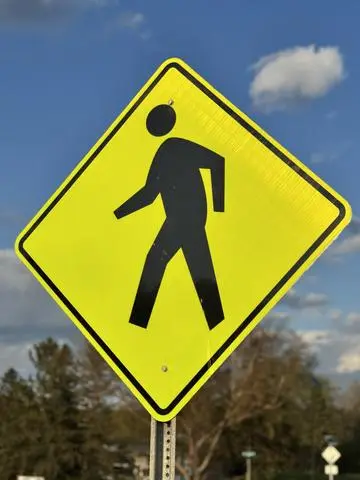
Yellow diamond sign showing a walking pedestrian symbol

Pedestrian Crossing

The pedestrian crossing warning sign (yellow-green diamond with walking figure) means a pedestrian crosswalk is present or ahead. Minnesota law requires drivers to yield to pedestrians in or entering a marked crosswalk — stop completely if needed. Failure to yield is a serious violation. Never wave pedestrians across — let them decide when it is safe.

Chapter 4 — Pedestrians / Chapter 5 — Warning Signs

Railroad crossing signs 3

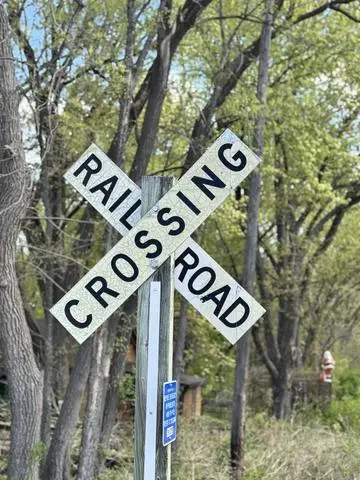
White X-shaped RAILROAD CROSSING crossbuck sign among bare trees

Railroad Crossbuck

The white X Railroad Crossing crossbuck sign marks every railroad crossing regardless of activity level. Even at passive crossings with no lights or gates, you must slow down, look both ways along the tracks, listen for trains, and be prepared to stop. Trains always have the right of way. Never assume a crossing is safe just because it has no active signals.

Chapter 4 — Railroad Crossings / Chapter 5 — Railroad Signs

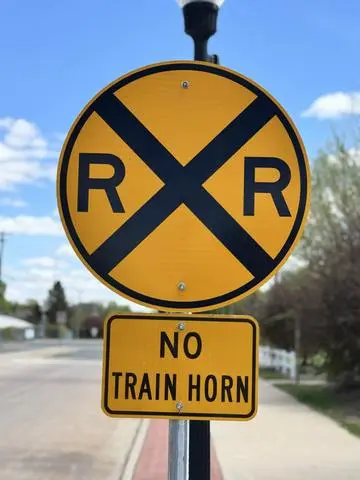
Round yellow railroad advance warning sign with RXR, above a NO TRAIN HORN plaque

Railroad Advance Warning / Quiet Zone

A Quiet Zone crossing means the FRA has waived the horn requirement for trains — but the crossing is STILL ACTIVE. Trains still pass through. You must still obey all crossing signals, lights, and gates. Never assume a quiet zone is safe without looking both ways.

Chapter 4 — Railroad Crossings / Chapter 5 — Railroad Signs

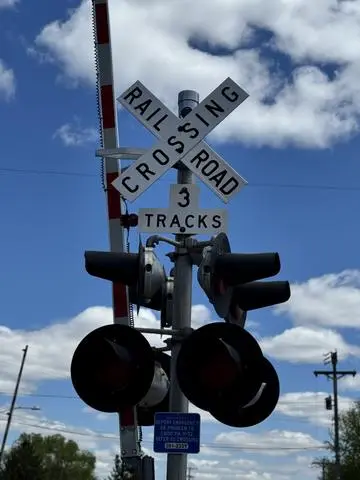
Railroad crossing with lowered-style gates, signals and a crossbuck marked 3 TRACKS

Railroad Crossing with Gates

A multiple-track crossing (this one has 3) is especially dangerous. When the gate rises after one train passes, do NOT immediately cross — another train on a different track may be approaching. Look both ways, count tracks, and confirm all tracks are clear before crossing. This is one of the most deadly crossing mistakes drivers make.

Chapter 4 — Railroad Crossings

Work zone signs 3

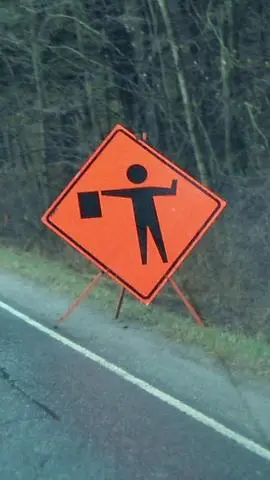
Orange diamond construction sign showing a worker holding a flag

Flagger Ahead

A traffic control flagger has the full legal authority of a traffic signal. When they hold a STOP paddle toward you, you must stop completely — just as you would at a red light. Disobeying a flagger is a moving violation with enhanced fines in Minnesota work zones. When they flip to a SLOW paddle and wave you through, proceed slowly. Flaggers are standing on the road. Treat them like your life depends on it — because theirs does.

Chapter 5 — Work Zone Signs / Flaggers

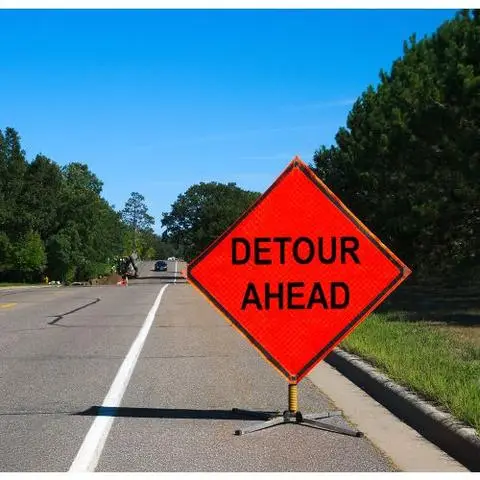
Orange diamond sign reading DETOUR AHEAD on a rural road

Detour Ahead

The orange Detour Ahead sign means the road ahead is closed — construction, flooding, an accident, or a collapsed bridge. The route straight ahead is not available to you. Orange signs always take precedence over your GPS, which may not yet know about the closure. Follow the orange detour markers until normal road signs resume. Ignoring a detour doesn't just get you ticketed — it might get you stuck in a construction zone or a dead end with nowhere to turn around.

Chapter 5 — Work Zone / Construction Signs

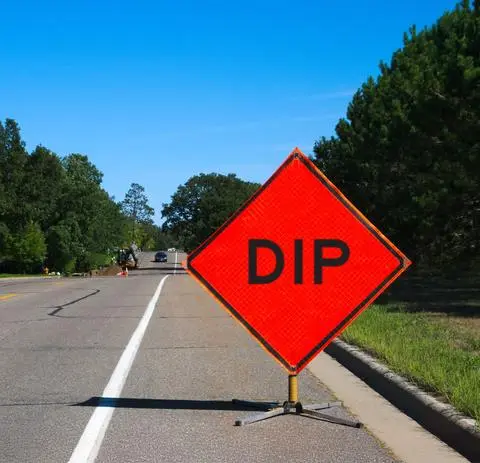
Orange diamond construction sign reading DIP placed on the roadway

Dip

A Dip sign warns of a sharp depression in the road surface — often a drainage crossing, a repaired cut in pavement, or a low point where water collects. At high speed, a dip can cause your vehicle to bottom out (front bumper or undercarriage hits the road), blow a tire, or briefly lose steering control as your wheels leave the pavement. A heavily loaded car sits lower and is even more vulnerable. Slow down, let the suspension work, and check for standing water — dips collect it.

Chapter 5 — Warning Signs / Road Surface Hazards

Guide signs and pavement markings 2

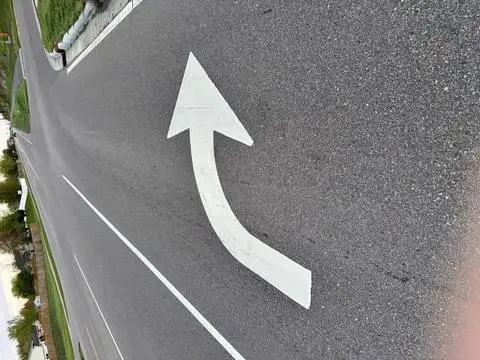
A white curved arrow painted on the road surface indicating a required right turn

Right Turn Arrow (Pavement Marking)

A white curved arrow painted on the pavement indicating a right turn means that lane is designated for right turns. You MUST turn right from this lane. Pavement arrows are regulatory markings — they have the same legal force as a lane-use sign. Going straight from a right-turn-only lane is illegal.

📍 Photographed on Diamond Path, Apple Valley

Chapter 5 — Pavement Markings

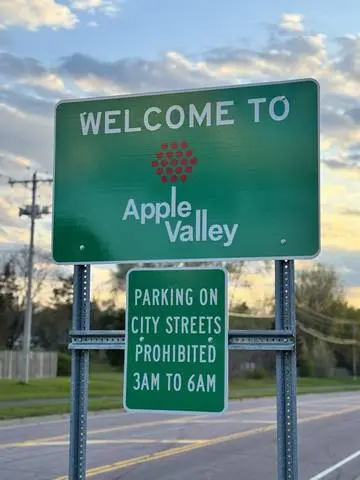
Green WELCOME TO Apple Valley city sign with a plaque prohibiting street parking from 3am to 6am

City Limits & Overnight Parking

Parking restrictions apply to the time your vehicle is parked, not just when you arrived. If you park at 2:45 AM and the restriction begins at 3:00 AM, your vehicle is in violation from 3:00 AM onward and can be ticketed or towed. Plan to be off city streets before the restriction starts.

📍 Photographed on Diamond Path, Apple Valley

Chapter 3 — Parking

Ready to test yourself?

500+ practice questions built for the Minnesota permit test by real driver education teachers. No account, no subscription, no ads.

Start the free practice test →