Free practice test →

The Minnesota-Specific Ones

Some of what Minnesota puts on its roads barely exists in other states, which means a national practice test will never prepare you for it. Reduced conflict intersections, the J-turn layout on divided highways, and the zipper merge are all things a Dakota County driver meets in a normal week.

These are the questions out-of-state transfers get wrong most often.

6 scenarios · free · no account needed · printable (Ctrl+P)
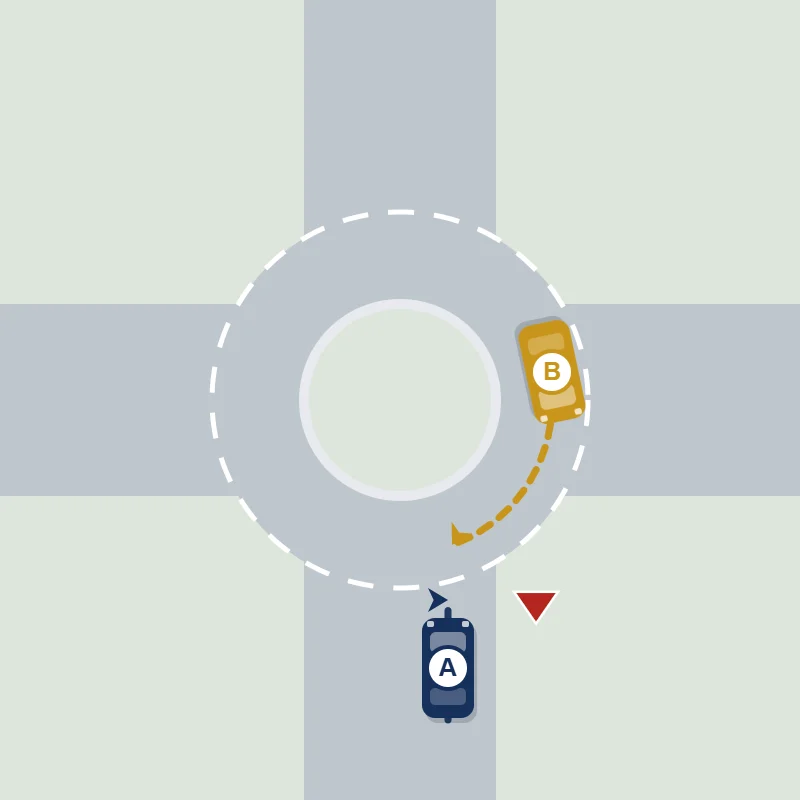
Top-down diagram: entering a roundabout
Scenario 1 · Entering a roundabout

A has reached the give-way line at the roundabout. B is already going round the circle. What should A do?

  1. AEnter alongside B and go round together
  2. BStop and wait until the circle is empty
  3. CYield to B, then enter when a gap comes
  4. DEnter first, since B can move over inside
Show the answer

C. Yield to B, then enter when a gap comes

Traffic already in the circle goes first. Slow on approach, look left, and if there is a gap you do not need to stop at all. Waiting for a completely empty roundabout is its own hazard, because the driver behind is not expecting it.

Source: MN Driver's Manual, Ch. 3 — Roundabouts
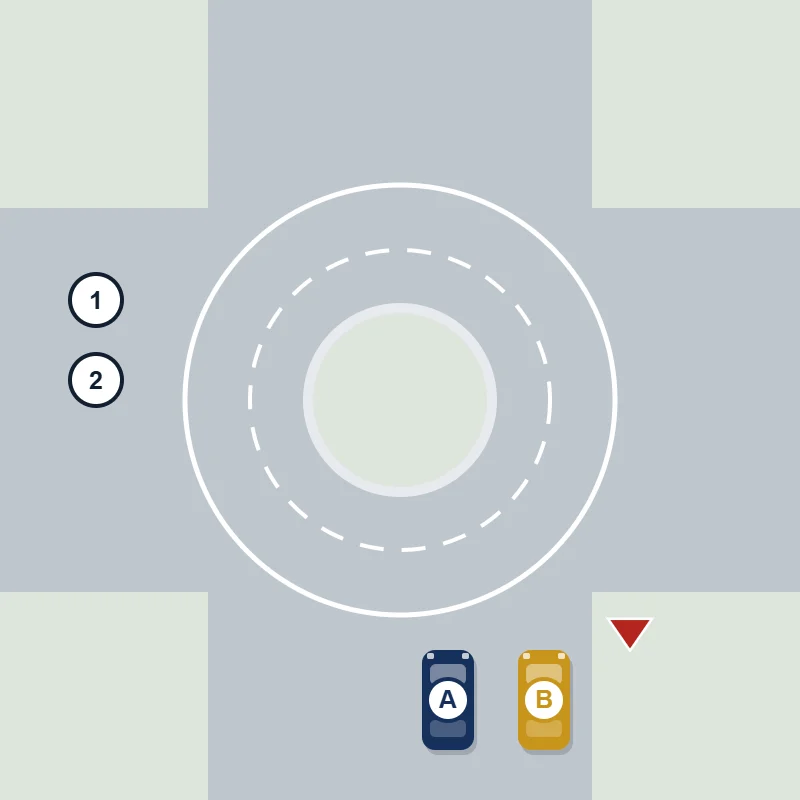
Top-down diagram: two-lane roundabout
Scenario 2 · Two-lane roundabout

A is approaching a two-lane roundabout and wants to turn left, leaving by the far exit. Which lane should A choose?

  1. ALane 2, the right one, then cut across
  2. BLane 1, the left one, before entering
  3. CEither lane; you sort it out inside
  4. DLane 2, because left turns exit late
Show the answer

B. Lane 1, the left one, before entering

Pick your lane before you enter: left lane to turn left, right lane to turn right, and either lane to go straight unless the signs say otherwise. Changing lanes inside a roundabout is how the side-swipes happen.

Source: MN Driver's Manual, Ch. 3 — Roundabouts
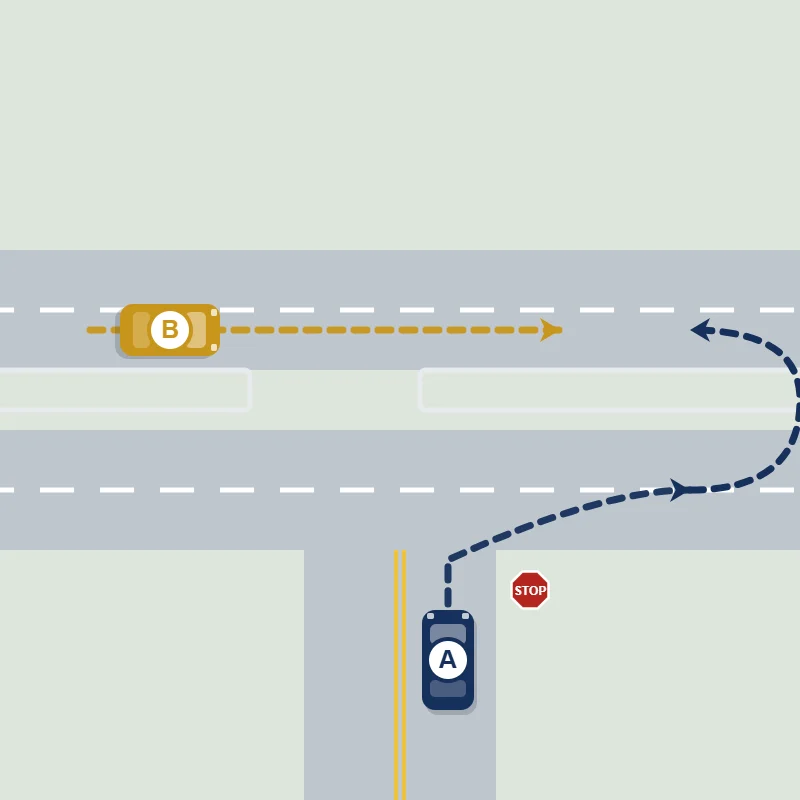
Top-down diagram: j-turn / reduced conflict intersection
Scenario 3 · J-turn / reduced conflict intersection

A is on the side road at a J-turn and wants to reach the far side of the divided highway. What is the correct move?

  1. ACross both carriageways in one movement
  2. BTurn right, then U-turn at the median gap
  3. CTurn left across the near carriageway only
  4. DWait for a gap both ways, then cross over
Show the answer

B. Turn right, then U-turn at the median gap

At a reduced conflict intersection you never cross or turn left straight from the side road. Turn right, move into the left-turn lane at the median opening, and U-turn there. You deal with one direction of traffic at a time, which is why these cut broadside crashes so sharply.

Source: MN Driver's Manual, Ch. 3 — Reduced conflict intersections

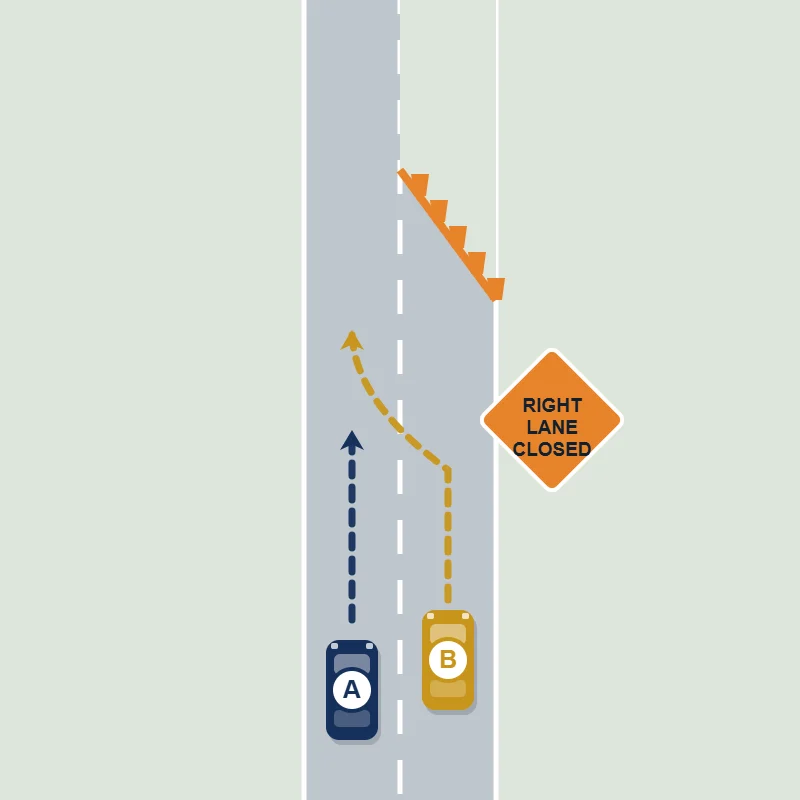
Top-down diagram: zipper merge
Scenario 4 · Zipper merge

The right lane closes ahead and traffic has backed right up. B is in the closing lane. Where should B move over?

  1. AAs soon as the first warning sign appears
  2. BOnly once the cones themselves actually start
  3. CAt the merge point, taking turns with A
  4. DWhichever lane happens to be moving faster
Show the answer

C. At the merge point, taking turns with A

When traffic is backed up, stay in your lane to the merge point and then take turns. MnDOT says this cuts the length of the backup by up to 40 percent. The catch: it is for slow, queued traffic. If the road is still moving at speed with no queue, move over early instead.

Source: MnDOT zipper merge guidance; MN Driver's Manual, Ch. 3

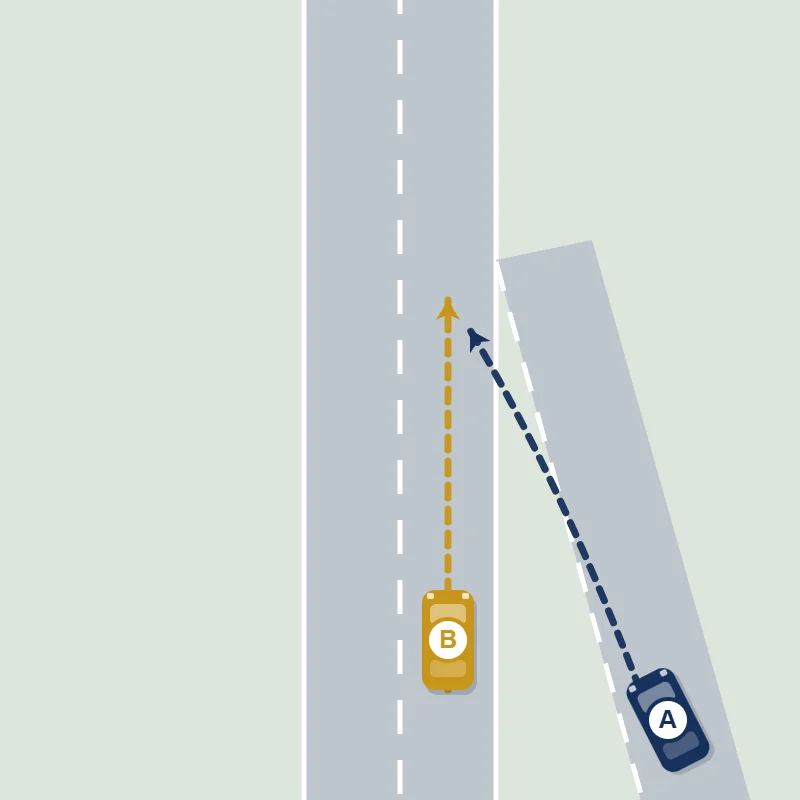
Top-down diagram: merging onto a freeway
Scenario 5 · Merging onto a freeway

A is on the entrance ramp with B already in the right-hand lane of the freeway. Who gives way?

  1. AB, who must move over to let A in
  2. BA, who is joining B's road
  3. CNeither; they share the merge equally
  4. DB, because A has run out of ramp
Show the answer

B. A, who is joining B's road

The merging driver gives way. Use the whole ramp to get up to the speed of the traffic you are joining, pick your gap and go. Drivers already on the freeway often move over as a courtesy, but they are not required to.

Source: MN Driver's Manual, Ch. 3 — Entering a freeway

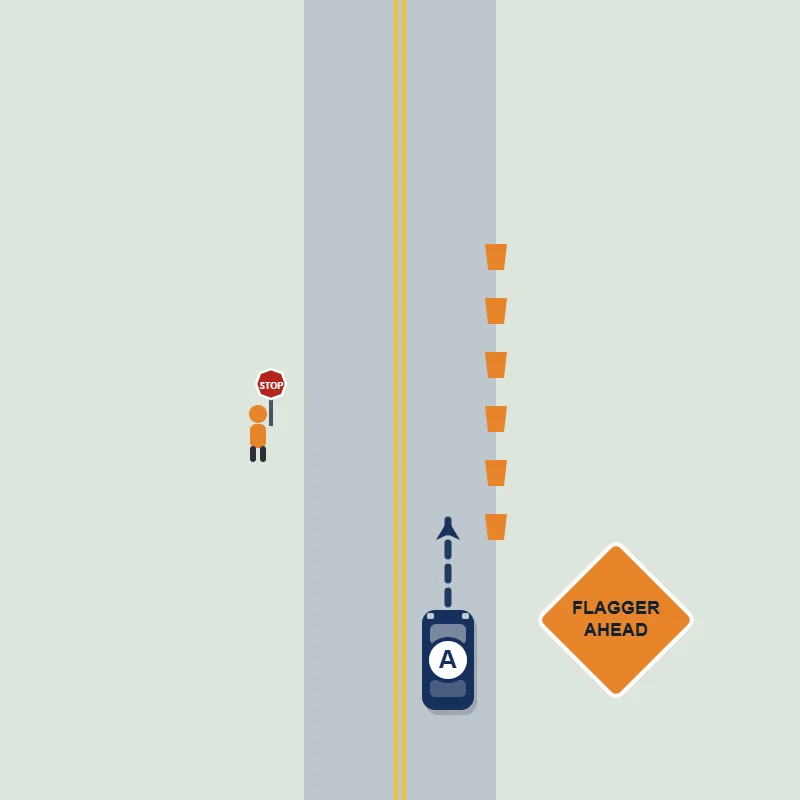
Top-down diagram: work zone flagger
Scenario 6 · Work zone flagger

A comes into a work zone and the flagger is holding up the STOP side of the paddle. What must A do?

  1. AStop and wait to be waved on by them
  2. BSlow to 20 mph and carry on past
  3. CStop only if a car comes the other way
  4. DFollow whatever the last sign said
Show the answer

A. Stop and wait to be waved on by them

A flagger directing traffic carries the same authority as a signal, and their instruction overrides the signs and markings. Stop, wait, and go only when they wave you through. Work zone fines in Minnesota carry a 300 dollar add-on.

Source: Minn. Stat. 169.06, subd. 4a

More right-of-way diagrams

Practice these with a score

All 75 of these diagrams are built into the free NorthStar DE practice app, along with 600 more Minnesota permit questions. No account, no subscription, no ads.

Open the free practice test →